
Furrow Pattern Acral Nevus
Furrow Pattern Acral Nevus - Web the parallel furrow pattern is the most common (a). Web acral melanocytic nevi have three major dermoscopic patterns: Web this results in less ink adhering to the furrow, while allowing the ink to enter the openings of eccrine pores. These dermoscopic patterns are termed the parallel ridge pattern and the parallel furrow pattern, respectively. Transition pattern observed on the lateral aspect of the heel. Web acral lentiginous is the most common form of melanoma and occurs most often on the sole and beneath the toenail. Web fig 1 acral nevus. More than 75% of benign acral lesions exhibit 1 of these major patterns. The parallel furrow pattern is regarded as the prototype of the three major dermoscopic. Web numerous specific dermoscopic patterns have been defined for nevi and melanoma located on acral sites. Web an automatic algorithm that can classify the “furrow” from “ridge” patterns of pigmentation on acral areas is proposed. 100%, p = 0.035), irregular diffuse pigmentation (27.3% vs. Web acral melanocytic nevi have three major dermoscopic patterns: [1] the example images have been approved by a panel of experts as representative of each given feature. Web among acral nevi, the parallel furrow (42.1%) was the most common pattern, followed by the latticelike (14.9%), nontypical (13.7%), fibrillar (10.8%), homogeneous (9.3%), globular (5.4%), and reticular (2.1%) patterns. Transition pattern observed on the lateral aspect of the heel. More than 75% of benign acral lesions exhibit 1 of these major patterns. Web 5 peas in a pod pattern (parallel furrow + globules on ridges) (congenital nevi) below are dermoscopic features commonly associated with the diagnosis “benign patterns of acral nevi”. Web fig 1 acral nevus. In a benign acral nevus, the pigmentation is along the furrows of the skin markings. In benign melanocytic tumors, the location of the pigment tends to favor the crista limitans, which corresponds to the furrows of the skin. In a benign acral nevus, the pigmentation is along the furrows of the skin markings. The parallel furrow pattern is regarded as the prototype of the three major dermoscopic. Web among acral nevi, the parallel furrow (42.1%). Web acral melanoma is an aggressive type of melanoma with unknown origins. 100%, p = 0.001) and grey colour (18.2%. Web acral lentiginous is the most common form of melanoma and occurs most often on the sole and beneath the toenail. Web fig 1 acral nevus. Transition pattern observed on the lateral aspect of the heel. Web numerous specific dermoscopic patterns have been defined for nevi and melanoma located on acral sites. Web in contrast, the main dermoscopic pattern of acral nevus is the parallel furrow pattern (pfp) showing linear pigmentation along the sulci of the skin markings. The acrosyringium are not affected. Web melanocytic nevi showing the parallel furrow or fibrillar pattern are predominantly located. In benign melanocytic tumors, the location of the pigment tends to favor the crista limitans, which corresponds to the furrows of the skin. Web dermoscopic pigmentation pattern is helpful in distinguishing an acral lentiginous melanoma and a benign acral nevus. These dermoscopic patterns are termed the parallel ridge pattern and the parallel furrow pattern, respectively. Web fig 1 acral nevus.. 100%, p = 0.001) and grey colour (18.2%. Pigmentation on the ridges of the surface skin markings is detected in early acral melanoma, whereas pigmentation along the furrows of the skin markings is seen in acral nevus. Web among acral nevi, the parallel furrow (42.1%) was the most common pattern, followed by the latticelike (14.9%), nontypical (13.7%), fibrillar (10.8%), homogeneous. Accurate discrimination is performed using the histogram analysis of dark/bright pattern width ratio. Web dermoscopic pigmentation pattern is helpful in distinguishing an acral lentiginous melanoma and a benign acral nevus. [1] the example images have been approved by a panel of experts as representative of each given feature. These dermoscopic patterns are termed the parallel ridge pattern and the parallel. Some variations of this pattern are represented in b through d. Web pigmentation pattern on dermoscopy is completely opposite between early acral melanoma and acral nevus; In benign melanocytic tumors, the location of the pigment tends to favor the crista limitans, which corresponds to the furrows of the skin. Pigmentation on the ridges of the surface skin markings is detected. In a benign acral nevus, the pigmentation is along the furrows of the skin markings. In benign melanocytic tumors, the location of the pigment tends to favor the crista limitans, which corresponds to the furrows of the skin. In early acral melanoma, the pigmentation is present on the ridges of the skin surface markings. Web fig 1 acral nevus. [1]. Pigmentation along the furrows of the skin markings is characteristic of acral naevus. Web an automatic algorithm that can classify the “furrow” from “ridge” patterns of pigmentation on acral areas is proposed. Web acral lentiginous is the most common form of melanoma and occurs most often on the sole and beneath the toenail. Transition pattern observed on the lateral aspect. Web an automatic algorithm that can classify the “furrow” from “ridge” patterns of pigmentation on acral areas is proposed. Web fig 1 acral nevus. In a benign acral nevus, the pigmentation is along the furrows of the skin markings. Web numerous specific dermoscopic patterns have been defined for nevi and melanoma located on acral sites. The acrosyringium are not affected. In benign melanocytic tumors, the location of the pigment tends to favor the crista limitans, which corresponds to the furrows of the skin. Web numerous specific dermoscopic patterns have been defined for nevi and melanoma located on acral sites. Some variations of this pattern are represented in b through d. The acrosyringium are not affected. [1] the example images have been approved by a panel of experts as representative of each given feature. Web statistical analysis of dermoscopic features revealed that parallel ridge patterns (54.5% vs. The furrow ink test is a quick and easy method to facilitate the correct identification of furrows and ridges on volar skin. Web fig 1 acral nevus. Web pigmentation on the ridges of the surface skin markings is characteristic of early acral melanoma. The parallel furrow pattern is regarded as the prototype of the three major dermoscopic. Pigmentation on the ridges of the surface skin markings is detected in early acral melanoma, whereas pigmentation along the furrows of the skin markings is seen in acral nevus. 100%, p = 0.001) and grey colour (18.2%. Web this results in less ink adhering to the furrow, while allowing the ink to enter the openings of eccrine pores. Web melanocytic nevi showing the parallel furrow or fibrillar pattern are predominantly located on the foot, in which case a regular parallel distribution of skin markings is observed. Transition pattern observed on the lateral aspect of the heel. Web in contrast, the main dermoscopic pattern of acral nevus is the parallel furrow pattern (pfp) showing linear pigmentation along the sulci of the skin markings.
Dermoscopic Patterns of 158 Acral Melanocytic Nevi in a Latin American

Dermoscopic Patterns of Acral Melanocytic Nevi Their Variations
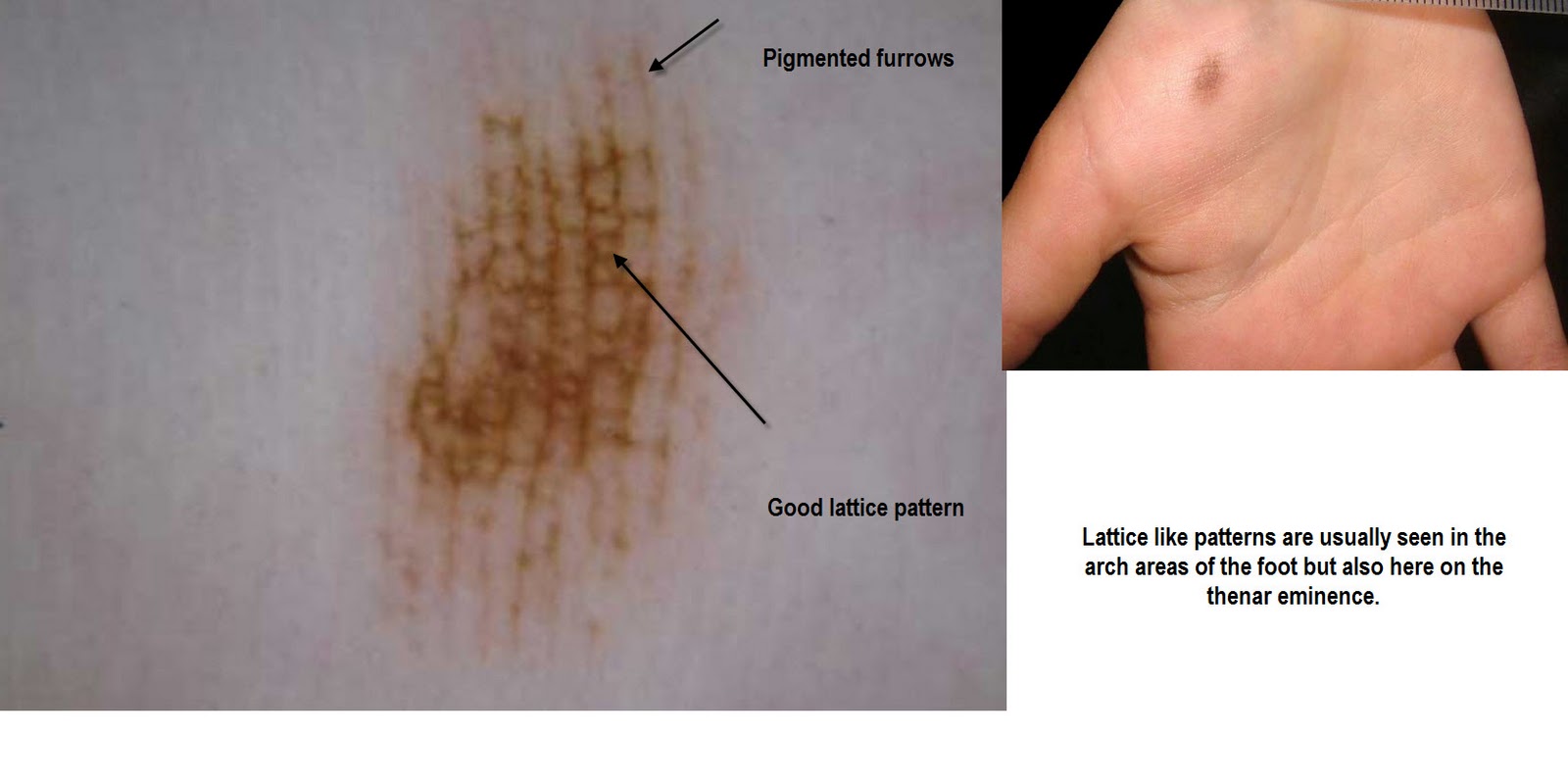
Dermoscopy Made Simple Acral nevus

Variations in the Dermoscopic Features of Acquired Acral Melanocytic
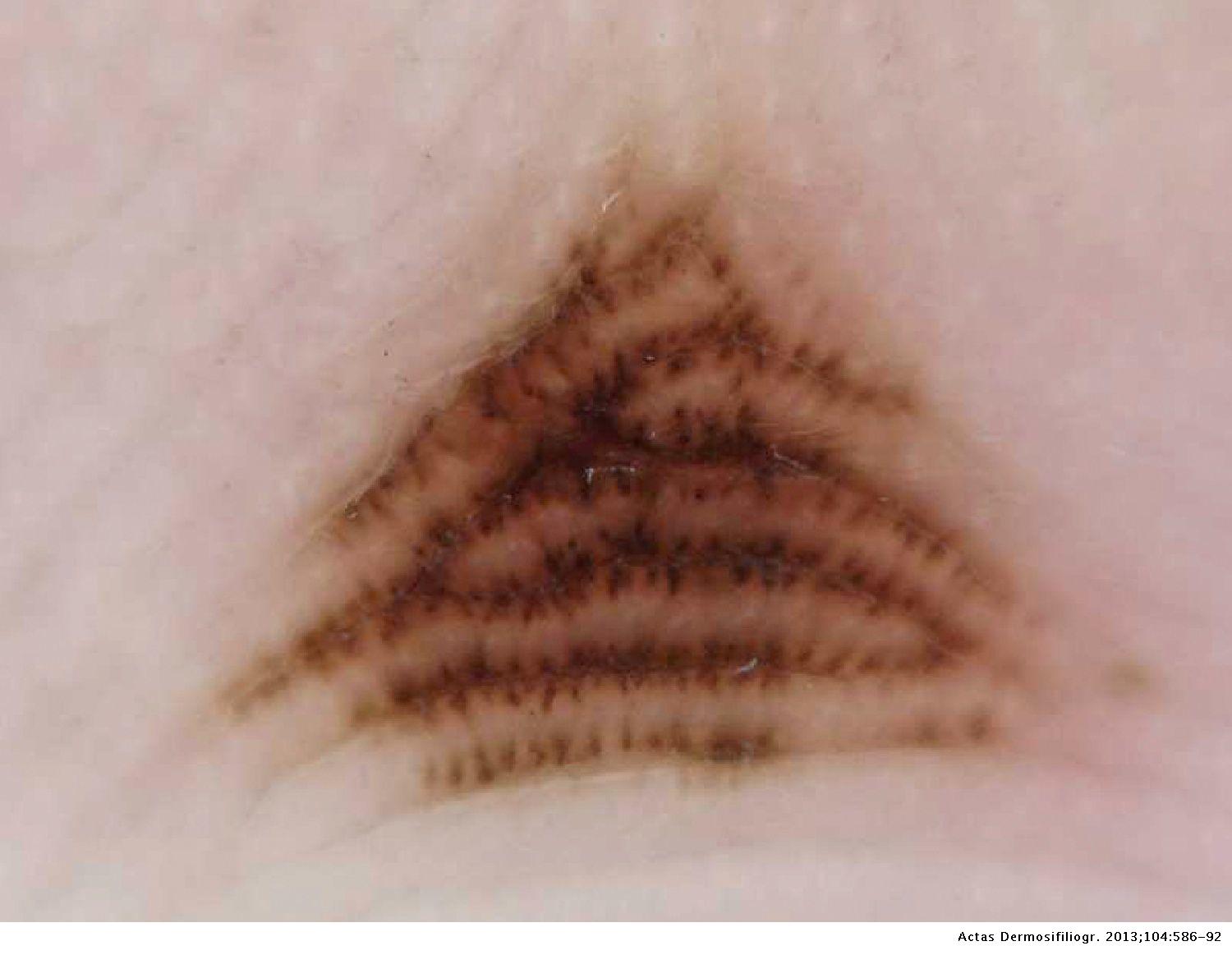
Dermoscopic Patterns of 158 Acral Melanocytic Nevi in a Latin American

Dermoscopy Made Simple Acral nevus

Dermoscopy Made Simple Acral nevus

Dermoscopic Characteristics of Congenital Melanocytic Nevi Affecting

Regular fibrillar pattern of acral nevus (dermoscopy with the furrow
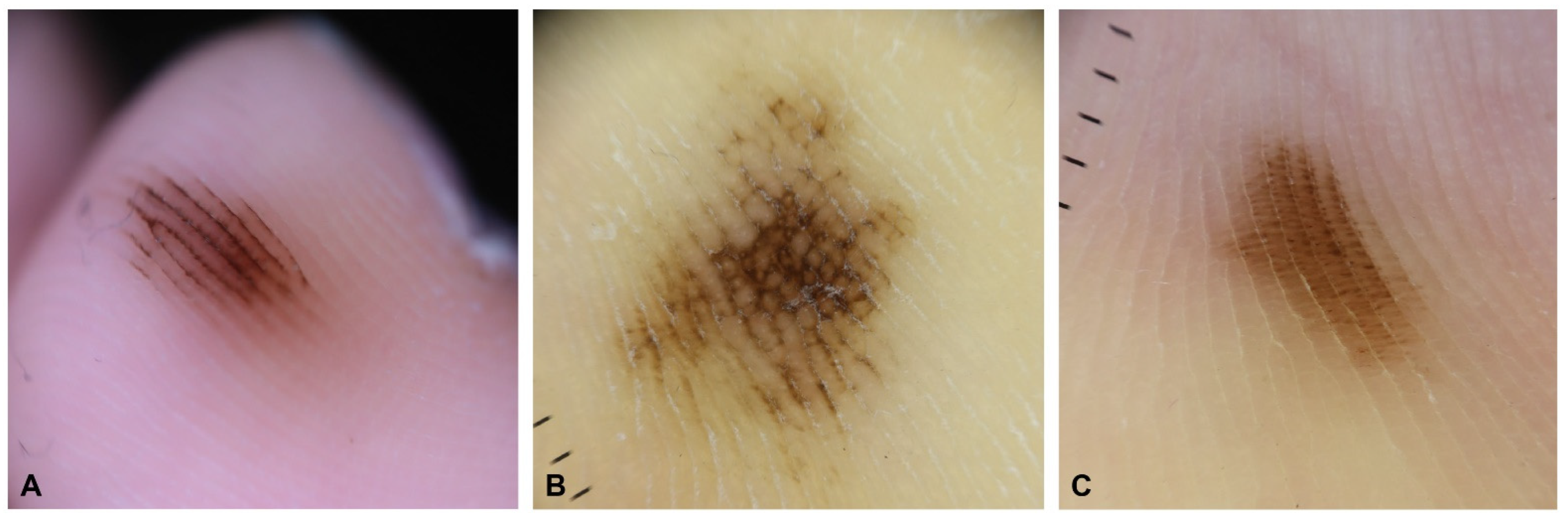
Dermatopathology Free FullText Acral Melanocytic Neoplasms A
Web Pigmentation Pattern On Dermoscopy Is Completely Opposite Between Early Acral Melanoma And Acral Nevus;
100%, P = 0.035), Irregular Diffuse Pigmentation (27.3% Vs.
In A Benign Acral Nevus, The Pigmentation Is Along The Furrows Of The Skin Markings.
These Dermoscopic Patterns Are Termed The Parallel Ridge Pattern And The Parallel Furrow Pattern, Respectively.
Related Post: